In the world of business, profit has long been the primary metric of success. However, as the global landscape evolves, so do our responsibilities as businesses. Enter the Social Impact Business Model Canvas (SIBMC), an extension of the traditional Business Model Canvas (BMC) designed to empower businesses to go beyond profit and consider their environmental and social impacts.
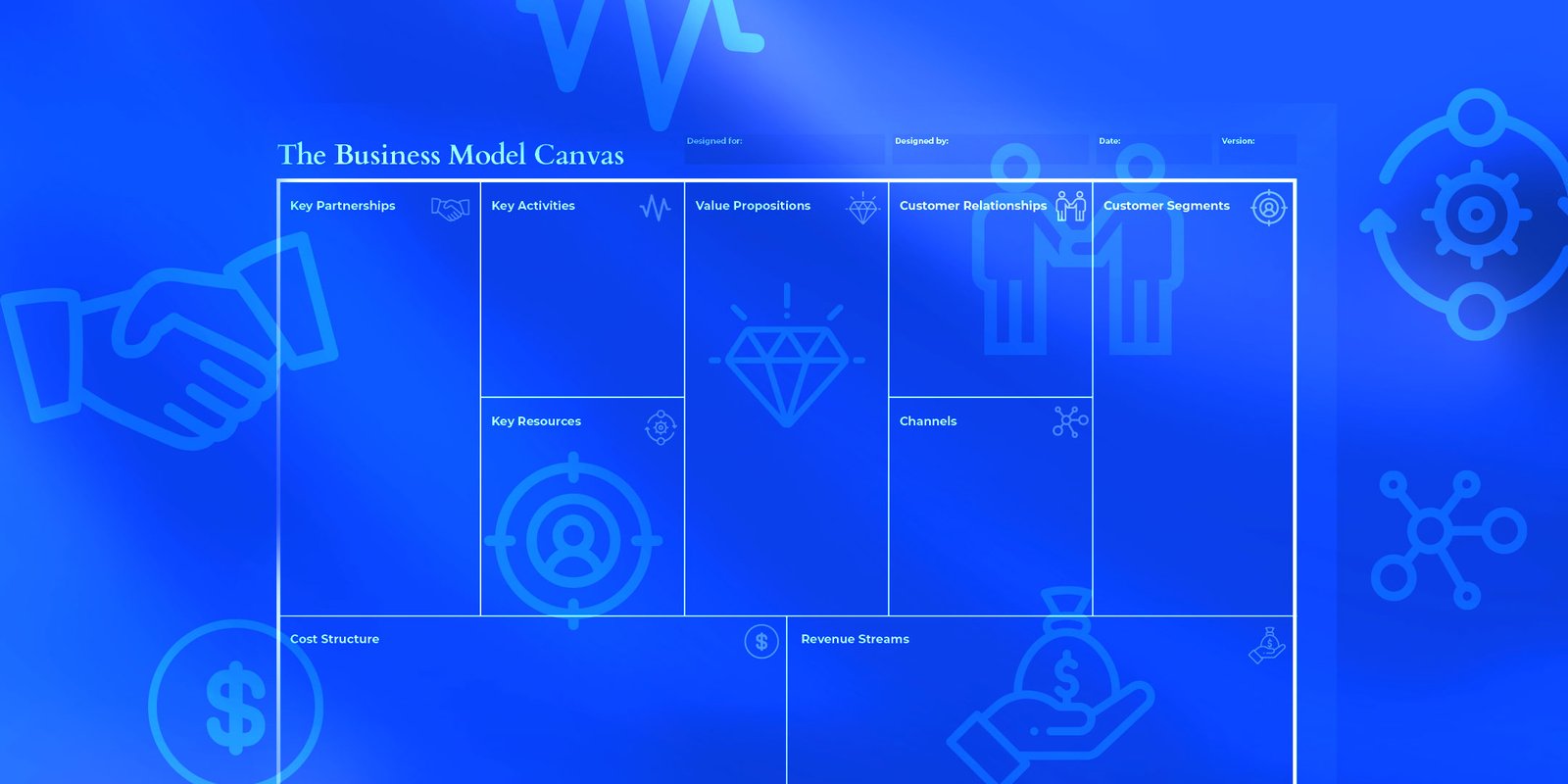
Before delving into the intricacies of the SIBMC, it’s essential to understand its foundation. The BMC serves as a blueprint for businesses, outlining key components such as value proposition, customer segments, revenue streams, and more. For those unfamiliar with the BMC, you can learn more about it here.
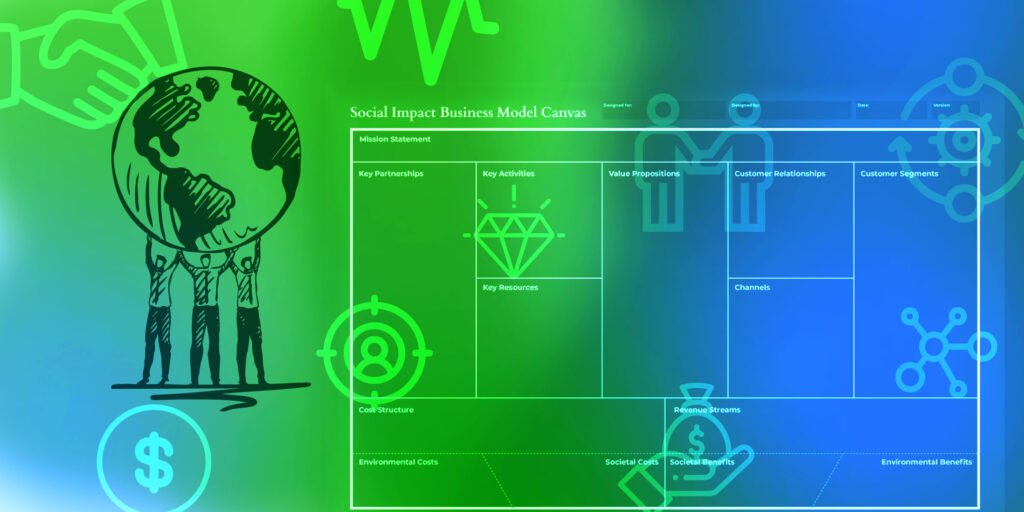
So, what sets the SIBMC apart? Developed by Ibrandium Resources, this innovative tool integrates additional blocks to evaluate a company’s mission, social benefits/costs, and environmental impacts.
Let’s break down these essential components:
Mission Statement:
A mission statement is the heartbeat of a company’s identity. It articulates the fundamental purpose, values, and goals driving the organization forward. In the SIBMC, the mission statement encapsulates what the business does, how it operates, and why it matters. By crafting a clear and concise mission statement, businesses can align their activities with their core values, fostering a sense of purpose that resonates with stakeholders and customers alike.
Social Benefits/Costs:
The social benefits/costs block prompts businesses to critically assess their impact on society. It examines how the company’s operations affect people’s lives, communities, political systems, health, well-being, and personal rights. Businesses must consider both positive contributions, such as job creation and community development, and potential detriments, such as environmental degradation or social inequality. By understanding and mitigating social costs while maximizing benefits, businesses can cultivate positive relationships with stakeholders and contribute to the greater good.
Environmental Benefits/Costs:
In today’s increasingly eco-conscious world, assessing environmental impacts is paramount for responsible business practices. The environmental benefits/costs block compels businesses to evaluate the consequences of their operations on the natural world. This includes considerations of air and water quality, biodiversity, resource depletion, and climate change. By adopting sustainable practices and minimizing environmental costs, businesses can reduce their ecological footprint and contribute to the preservation of our planet for future generations.
By integrating these additional blocks into the SIBMC, businesses gain a comprehensive framework for holistic decision-making. They can align their strategies with broader societal and environmental goals, fostering sustainable growth and positive social impact. Moreover, by transparently communicating their mission, social benefits, and environmental commitments, businesses can build trust with customers, investors, and communities, solidifying their position as responsible corporate citizens.
In essence, the SIBMC empowers businesses to transcend traditional notions of success and embrace a more inclusive and sustainable approach to business. It serves as a roadmap for navigating the complex interplay between profit, purpose, and societal well-being, guiding businesses towards a future where prosperity is synonymous with positive social and environmental impact.
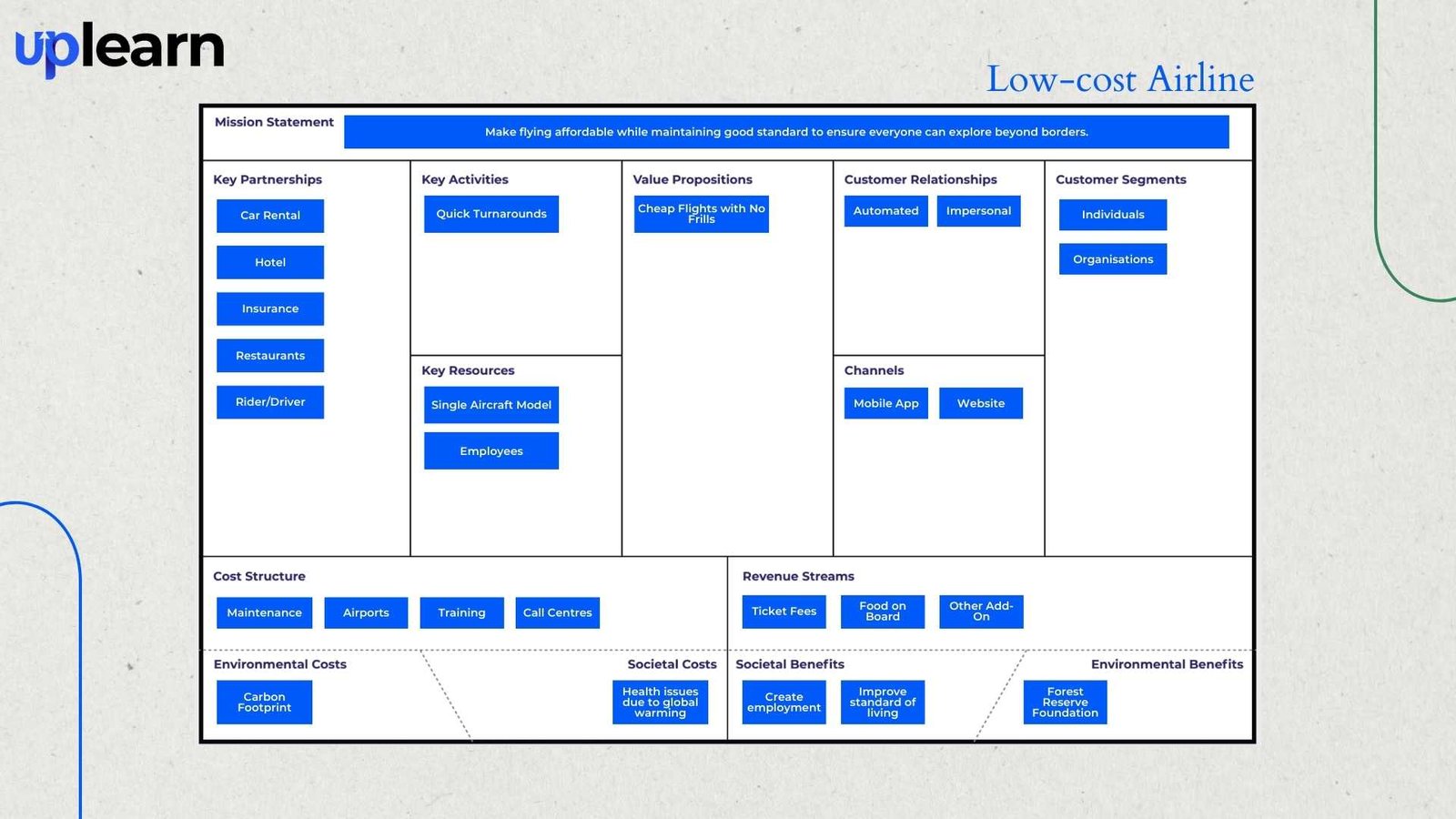
To illustrate the practical application of the SIBMC, let’s consider a Low-cost Airline. By utilizing the canvas, the airline can outline its mission statement, emphasizing affordable travel accessibility while minimizing environmental impacts. Social benefits may include increased mobility for diverse socioeconomic groups, while costs could arise from noise pollution and community disruption. Environmental benefits may stem from fuel-efficient operations, while costs might manifest in carbon emissions and resource depletion.
By systematically evaluating these factors, the Low-cost Airline can refine its business model to prioritize sustainability and social responsibility, fostering positive outcomes for both people and the planet.
Embrace the SIBMC. Embrace the journey toward a better tomorrow. Download the SIBMC template here.
Together, let us embark on the path of purpose-driven entrepreneurship, where success is measured not only in profits but in the positive impact we create for society and the environment. With the SIBMC as our guide, we can build businesses that not only thrive but also contribute to a more equitable, sustainable future for generations to come.